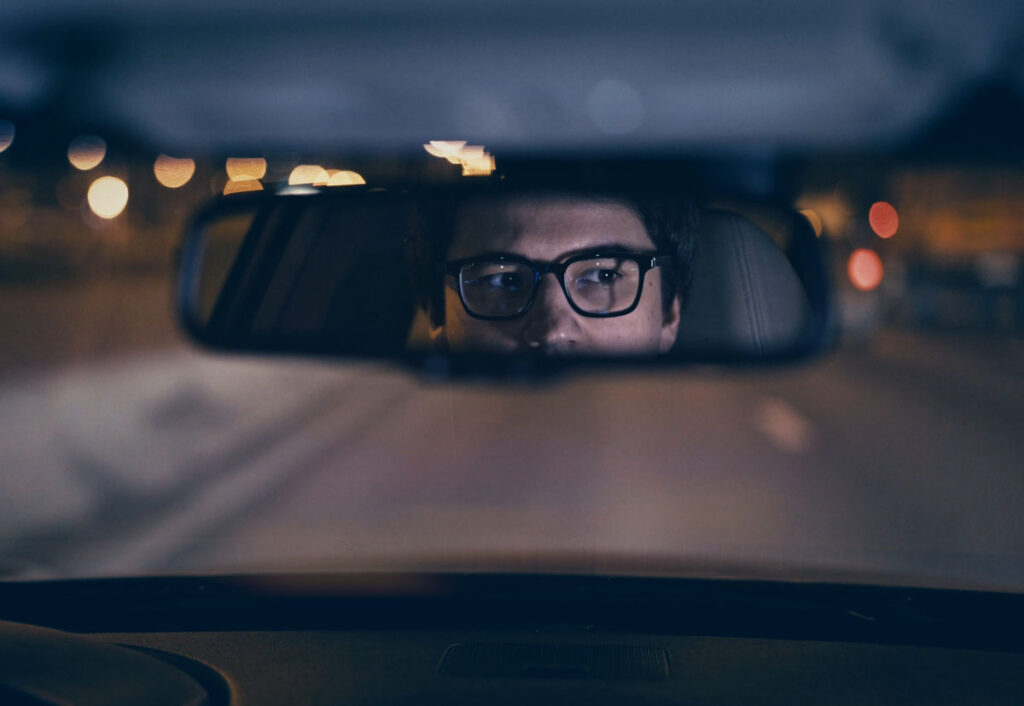
Driving
Drivers need to call upon increasing use of sensory skills with the ever growing number of vehicles using our roads. In 1950 it was estimated that in the UK there were 4 million vehicles on the road – by 2009 this figure had risen to 34 million vehicles.
It is important to note that vision provides approximately 95% of the sensory input to the brain required for driving. Many young people start to learn to drive without ever having had an eye examination and it is therefore vital to ensure that our vision meets the standards required by the DVLA before we start to drive.
With the average age of the population increasing it is also important to stress the effect that ageing has on the eye. Whilst older drivers benefit from the experience they have gained, they are also significantly affected by the reduced transmission of light through the optic media. It is therefore essential for the older driver to have a regular eye examination and to discuss the lens options and features that will benefit them and enhance their vision for driving. As we get older we can face difficulties with contrast sensitivity, light and dark adaptation, glare, colour perception and restricted field of view; and these difficulties are often exaggerated when driving at night.
When the eye is adapted to a specific light level then sources much more intense than the prevailing level produce “glare”. Night driving is the most common occurrence, when the eye is adapted to the dark but an oncoming headlight produces glare. It is also true that glare can be experienced during the day due to the high intensity of the sun. In older people, the natural age-induced clouding of the crystalline lens causes light entering the eye to scatter, which increases the glare dramatically.An anti-reflection treatment to the lens can reduce glare significantly by allowing more light to pass through the lens without unwanted and nuisance reflections from the surface of the lens. This can help to reduce ghosting effects and haloing around lights when night driving, improve visual acuity and contrast, reduce eyestrain and fatigue, and improve the cosmetic appearance of spectacle lenses.
Polarised Lenses
Glare when driving during daylight hours is not just inconvenient - it is dangerous. Many drivers regularly take unnecessary risks, not because they drive too fast or ignore road signs, but because they fail to wear sunglasses with polarised lenses; which leaves even safe drivers vulnerable to the dangers of glare.
Roads create glare when the sun reflects from the surface because they are in a horizontal plane to the driver’s eye. This polarising effect is increased when the road is wet and the sun is low in the sky, but in any conditions some glare can be present. The car’s interior compounds the problem, with glare being reflected from the dashboard onto the back surface of the windscreen.The simple step of wearing sun protection with polarised lenses has been proven to improve visibility and reduce the risk of accidents.
Drivewear®
Traditionally a driver might have a clear pair of lenses and a polarised sunglasses for bright light conditions, but often this is no longer enough. Today our lives are strongly influenced by the car, which has changed the way that we experience the outdoors. We now need a third category of lenses in our modern, automobile-centered world.Drivewear lenses are capable of sensing and reacting to varying light conditions both outside and behind the windscreen of the car. From bright sunlight accompanied by intense, blinding glare, to overcast inclement conditions, Drivewear lenses provide the wearer with the appropriate visual solution.
These lenses provide glare protection through polarisation and enhance and protect vision through photochromics, which respond to both visible and ultra-violet light. By combining the strengths of two of the most important technologies in eyewear today, Drivewear has been developed as the lens of tomorrow.
Please contact your local branch of Rawlings Opticians for all the advice that you need on the best lens choices for your driving requirements.